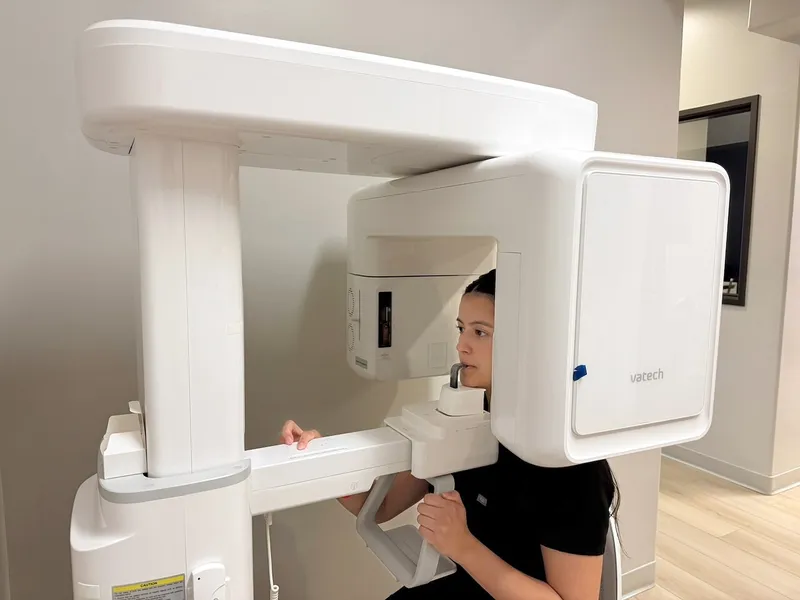
Most crowns at our office are scanned, designed, milled on the in-office Glidewell mill and cemented in a single appointment. There is no putty impression and no weeks in a temporary crown. A few cases, such as some front teeth, bridges and implant crowns, may still take two visits.
What is a same‑day crown?
A same‑day crown is a permanent crown that is designed and made in the dental office during your appointment, so you leave with it already in place.
A traditional crown starts the same way, but the impression goes to an outside lab, and you wear a temporary for a few weeks while it is made. A same‑day crown removes that wait and the second round of numbing.
If you have ever had a temporary pop off over a weekend, or rearranged work twice for one tooth, you already know why that matters.
How does a one-visit crown work?
A one-visit crown follows five stages inside a single appointment, and you are awake throughout, with the tooth numbed before any shaping.
Plan on one longer visit rather than two short ones, since the crown is made while you wait.
From broken tooth to finished crown in one appointment
Here is what happens in the chair, in order.
- 01Numb and shape the tooth
Your dentist numbs the area, removes any decay or weak tooth structure, and shapes the tooth so the crown can sit over it.
- 02Digital scan, no putty
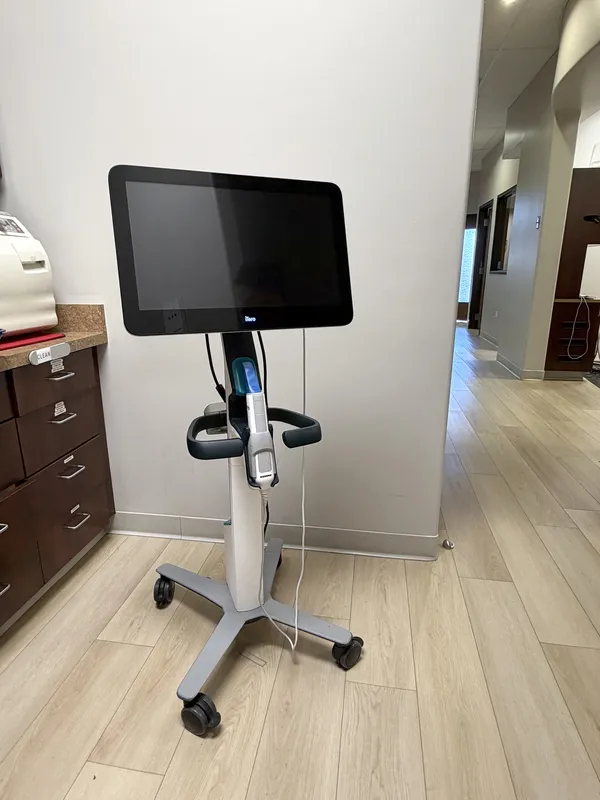
A small iTero wand takes a 3D scan of the shaped tooth, its neighbors and your bite. There is no tray of impression material to hold in your mouth.
- 03Design on the chairside screen
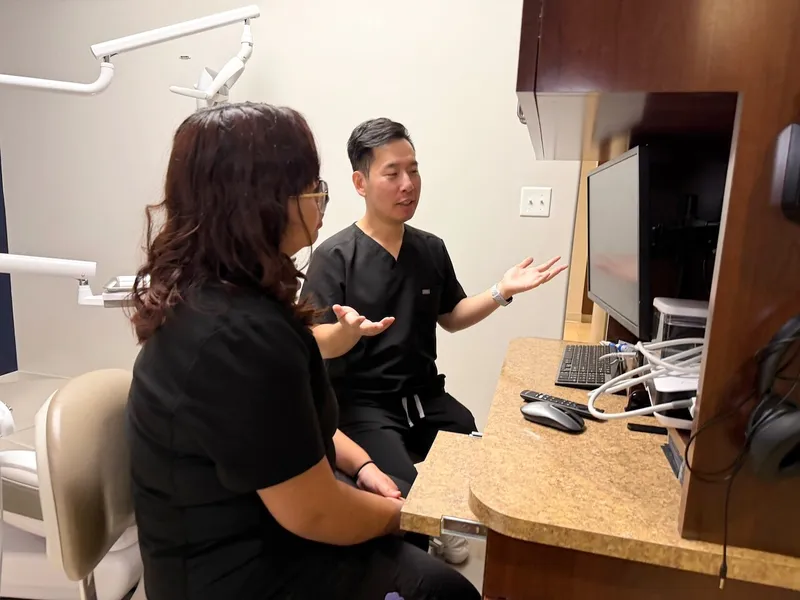
The crown is designed on the screen beside you to fit the prepared tooth and meet the teeth above it. You can watch and ask about the shape or shade.
- 04Milled in the office
The design goes to our Glidewell mill, which cuts the crown from a solid ceramic block right here in the office while you rest.
- 05Glaze, check and cement
The crown is finished and glazed, then tried in for fit and checked against your bite. Once it feels right, it is cemented in place.
How is a same‑day crown different from a lab crown?
Both are custom crowns that cover and protect a damaged tooth. The main differences are how many visits it takes and where the crown is made.
A lab crown is still a good crown, and some teeth are better served by one. The same‑day route simply removes the waiting, the temporary and the second appointment when your tooth allows it.
Same‑day crown vs a traditional lab crown
For most single crowns, this is how the two routes compare.
| Feature | Same‑day crown here | Traditional lab crown |
|---|---|---|
| Visits | Usually one | Usually two, a few weeks apart |
| Impression | iTero digital scan, no putty | Often a putty impression, though some offices scan |
| Temporary crown | None | Yes, worn between visits |
| Who makes it | Milled in our office on the Glidewell mill | An outside dental lab |
| Fit check | Checked against your scan and bite before you leave | Checked at the second visit |
| Material | Solid ceramic block chosen for the tooth | Ceramic, zirconia or other lab materials |
Not every crown suits the same‑day route. Your dentist will tell you which one your tooth needs before any work begins. | ||
When does a crown still take two visits?
Most single crowns in Plano can be finished in one appointment, but some cases still go to a dental lab and take two visits.
- Some front teeth: a front tooth that needs complex shade layering to match its neighbors may be sent to a lab.
- Some bridges: a bridge that spans several teeth may need lab work and a second visit.
- Implant crowns: a crown on a dental implant follows its own timeline, set by healing.
- Certain materials: some materials are made only by a dental lab.
- Teeth that need work first: a tooth may need a build-up or a root canal before a crown can go on.
Every crown at our Plano office starts from a digital scan either way, so there is no tray of putty even when a lab is involved.
You will know which route your tooth needs at the start of the appointment, before any numbing, so you can plan your day around it.
Can a cracked or broken tooth get a crown the same day?
Often, yes. A chipped or cracked tooth above the gumline is a common reason for a same‑day crown.
A crack that runs below the gum is different. If it reaches the root, the tooth may not hold a crown, and an extraction may be the better choice. Our guide on root canal vs extraction explains how that decision is made.
Pain when you bite down and let go is often a sign of a crack you cannot see yet. Waiting tends to let a crack spread, so an exam sooner usually keeps more options open.
Can a root canal and a crown happen in one visit?
Often, yes. With the mill in the office, the crown that follows a root canal can often be made the same day, depending on how the tooth looks once treatment is done.
Why back teeth usually need a crown after a root canal
A root canal leaves a tooth hollowed and more brittle, and back teeth carry most of your chewing force. A crown covers the tooth and helps protect it from splitting.
Front teeth take less load, so they sometimes need only a filling. Your dentist will tell you which applies to your tooth.
How do I care for a milled crown?
A milled crown cannot decay, but the tooth underneath still can at the edge where the two meet. Care is simple and mostly what you already do.
Your bite may feel slightly different for a day or two while you get used to the new shape. If it still feels high after that, call us and we will adjust it.
- Brush twice a day with a soft brush, paying attention to the gumline around the crown.
- Floss under the margin, where the crown meets the tooth, since that edge is where new decay usually starts.
- Wear a night guard if you grind or clench, because grinding is hard on crowns and natural teeth alike.
- Avoid chewing ice, pens or other hard objects that can chip ceramic.
- Keep your checkups, so the crown and the tooth under it are checked twice a year.
What does a same‑day crown cost, and does insurance cover it?
The cost depends on the tooth, the material and whether the tooth needs a build-up or other treatment first. You get a written, itemized quote before any work begins.
Many PPO plans pay part of a crown when it is needed to repair a tooth. We file PPO claims for you and can request a pre-treatment estimate, so you know your plan's share in writing.
Coverage, waiting periods and annual maximums vary from plan to plan. Call with your insurance details and we will check your benefits before your visit.
Because a same‑day crown needs no second visit, you also skip a second afternoon away from work.
What is the next step?
If a tooth has cracked, or a filling keeps breaking, the next step is an exam and a scan to see whether it can be crowned the same day.
You see the tooth on screen, hear every option and get a written quote before anything starts. Results vary from tooth to tooth.
- Call Custerpoint Family Dental at 972-265-9033.
- Or book a visit online at our office on Custer Road in Plano.
- Directions and parking are on our Plano location page.